In early May 2026, one real estate site tracking active Rancho Bernardo listings put the median list price at $1,044,475 across 338 homes on the market, with an average of $708.75 per square foot and 48 days sitting before going pending. A month later, another site pegged the neighborhood's median home price at $902,449, with an average sale price of $952,824. Same zip codes, same season, a gap of more than $140,000.
Neither number is wrong. That's the part worth sitting with. One is measuring what sellers are asking for right now. The other is measuring what actually closed. And both are drawing from whatever mix of homes happened to be transacting in whichever pocket of Rancho Bernardo was active that particular month. If you're comparing that single "median" against a house you're looking at in The Trails or a condo in Oaks North, you're not comparing against the market. You're comparing against a statistical average of several markets that don't behave the same way and were never meant to be averaged together.
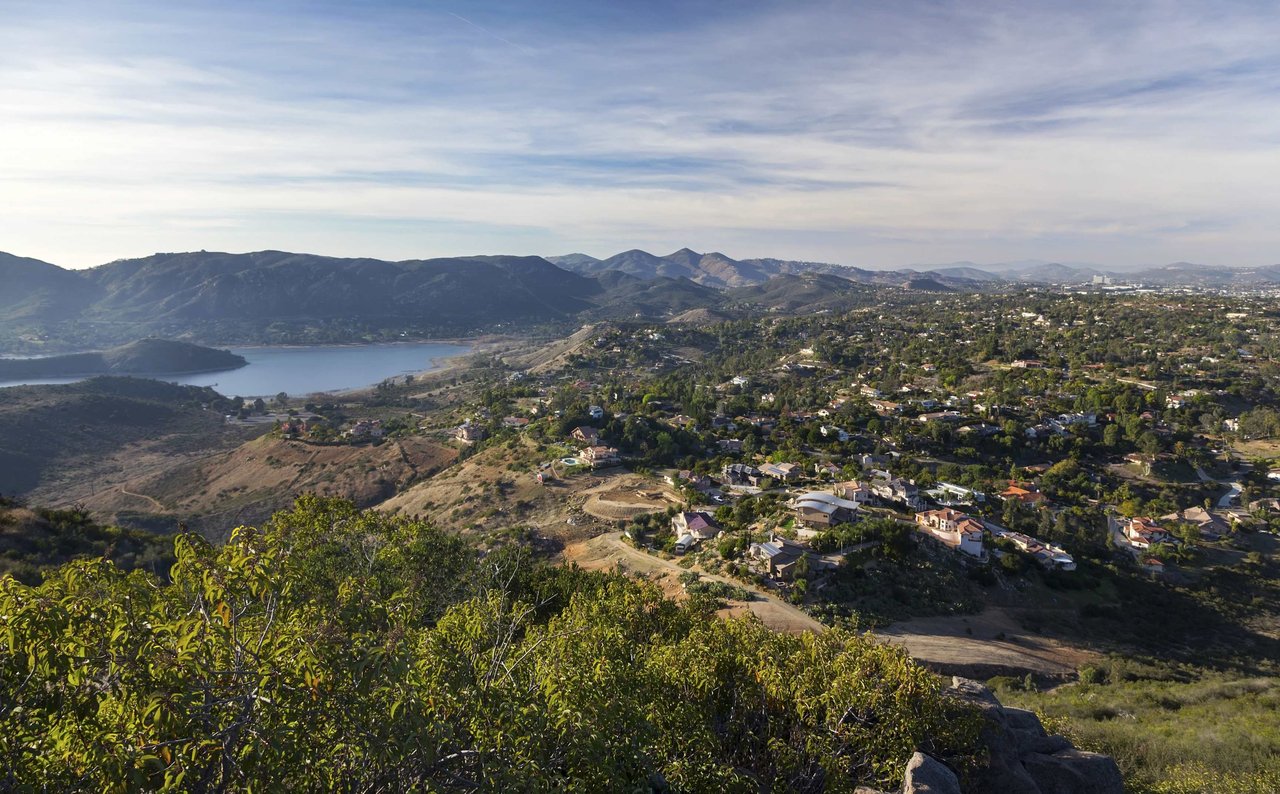
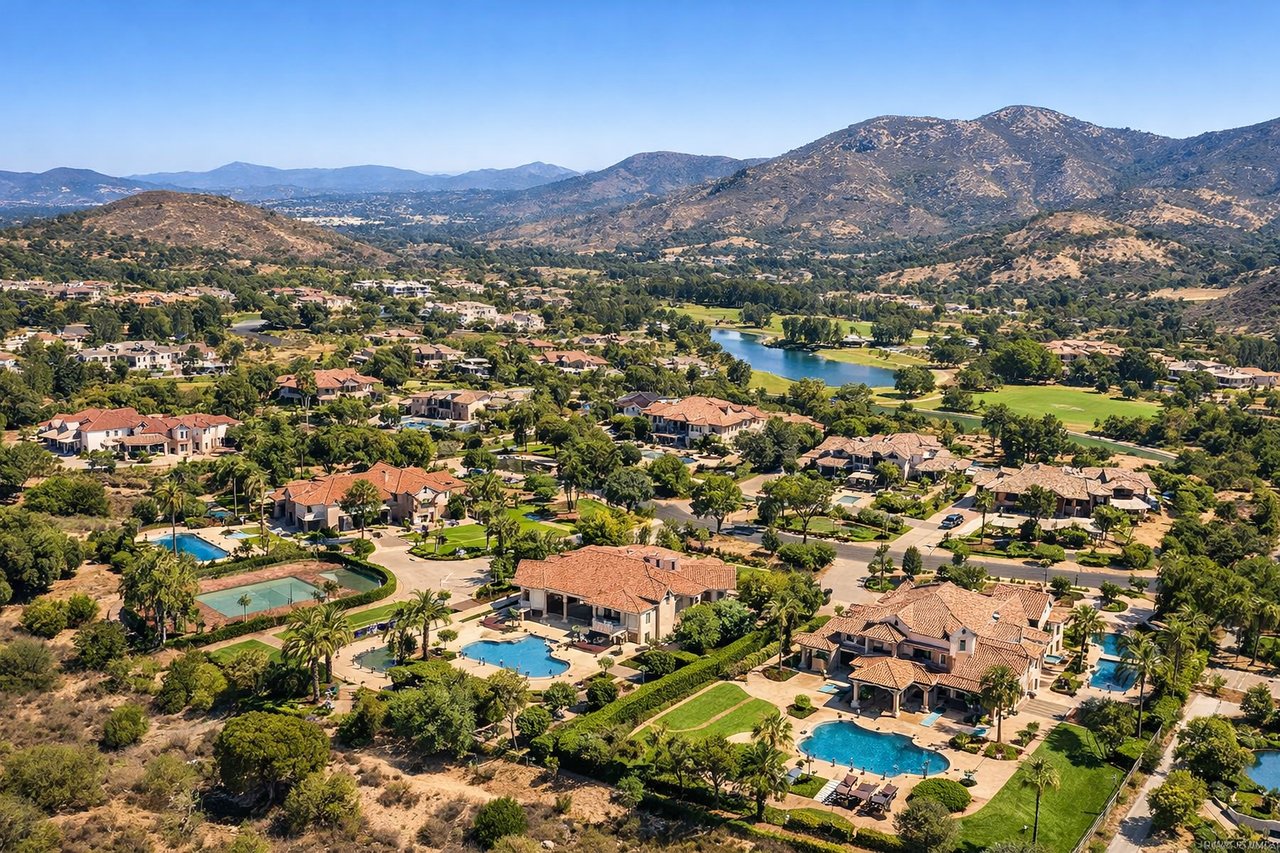
Rancho Bernardo isn't one housing market wearing one name. It's a federation of distinct, HOA-branded villages, each with its own age restrictions, construction era, and price tier, loosely stitched together under a community name that dates back to a 19th-century ranch. Understanding that isn't trivia. It's the difference between a comp that means something and a comp that misleads you.
The clearest proof is inside a single golf course
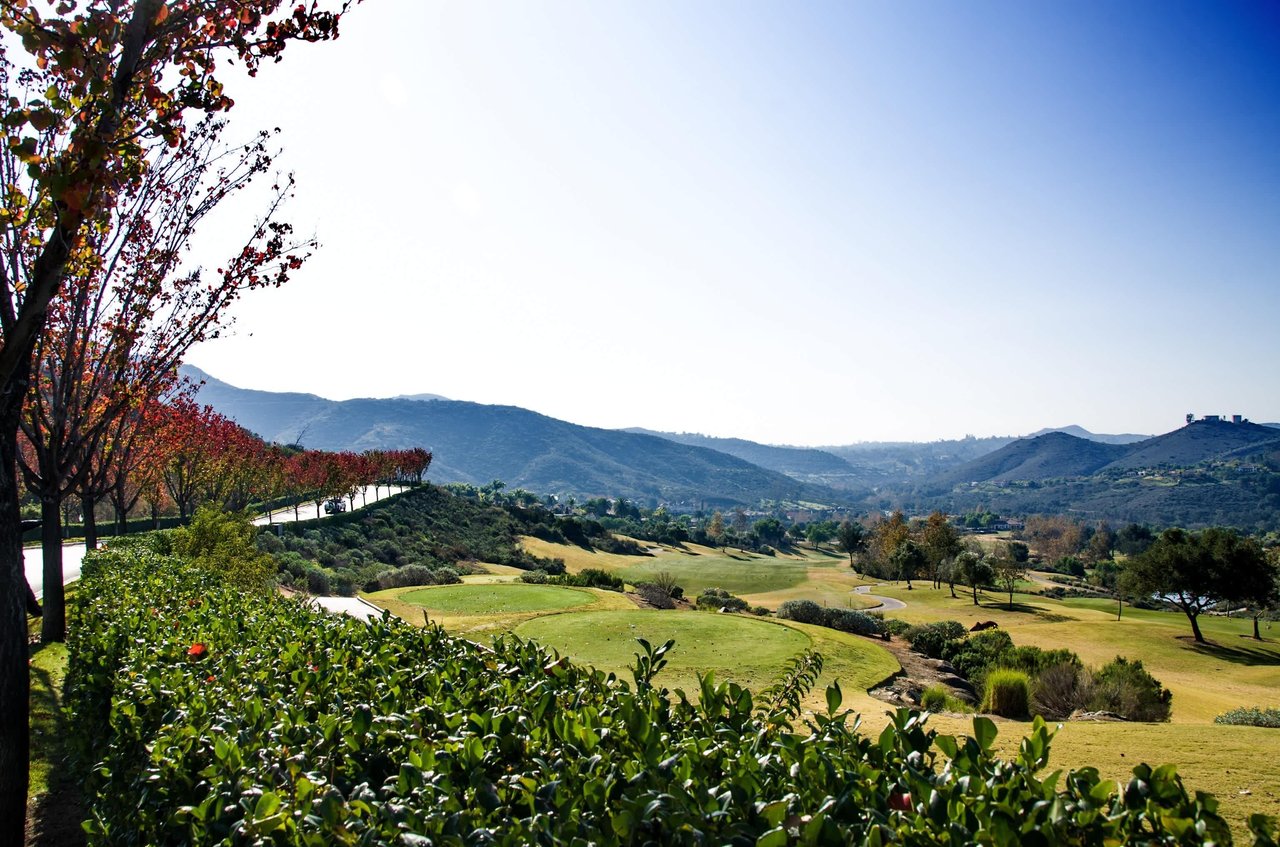
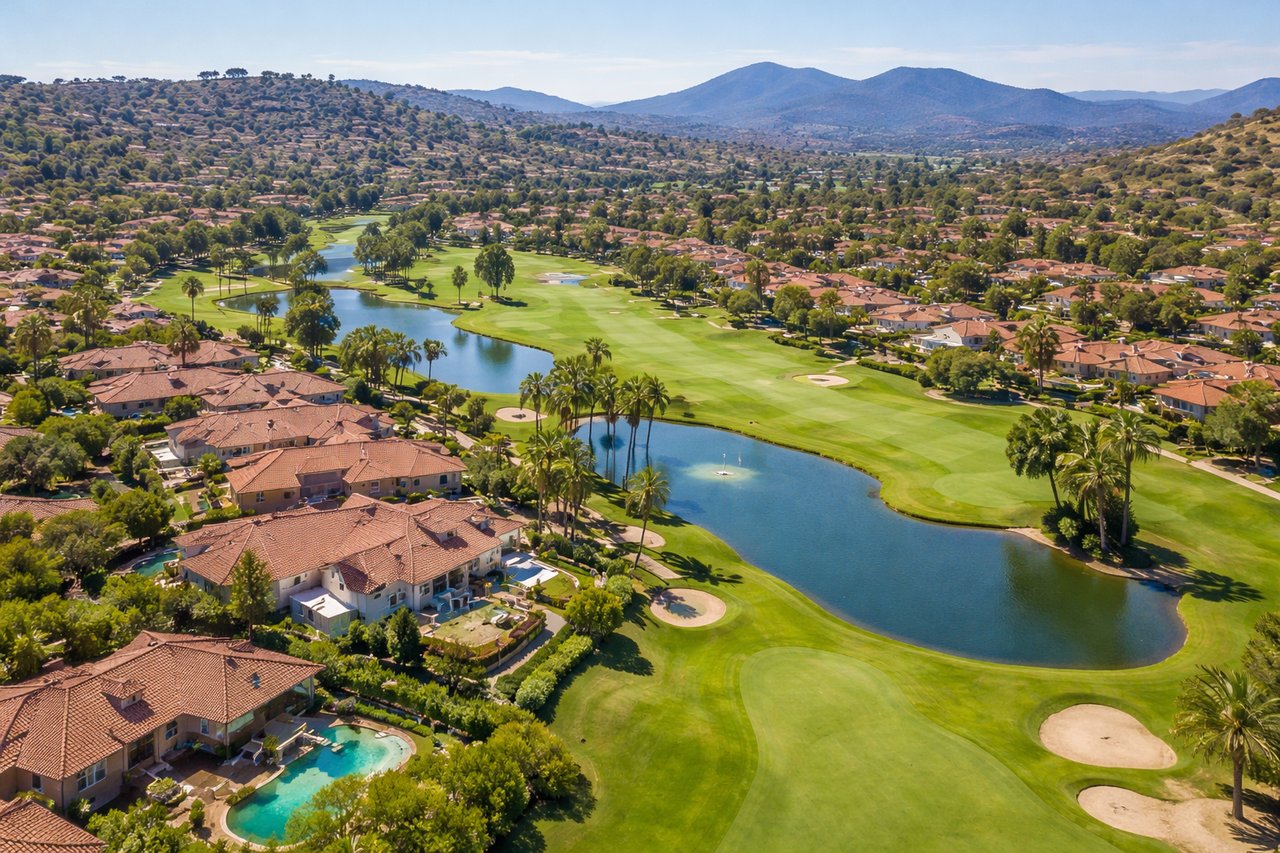
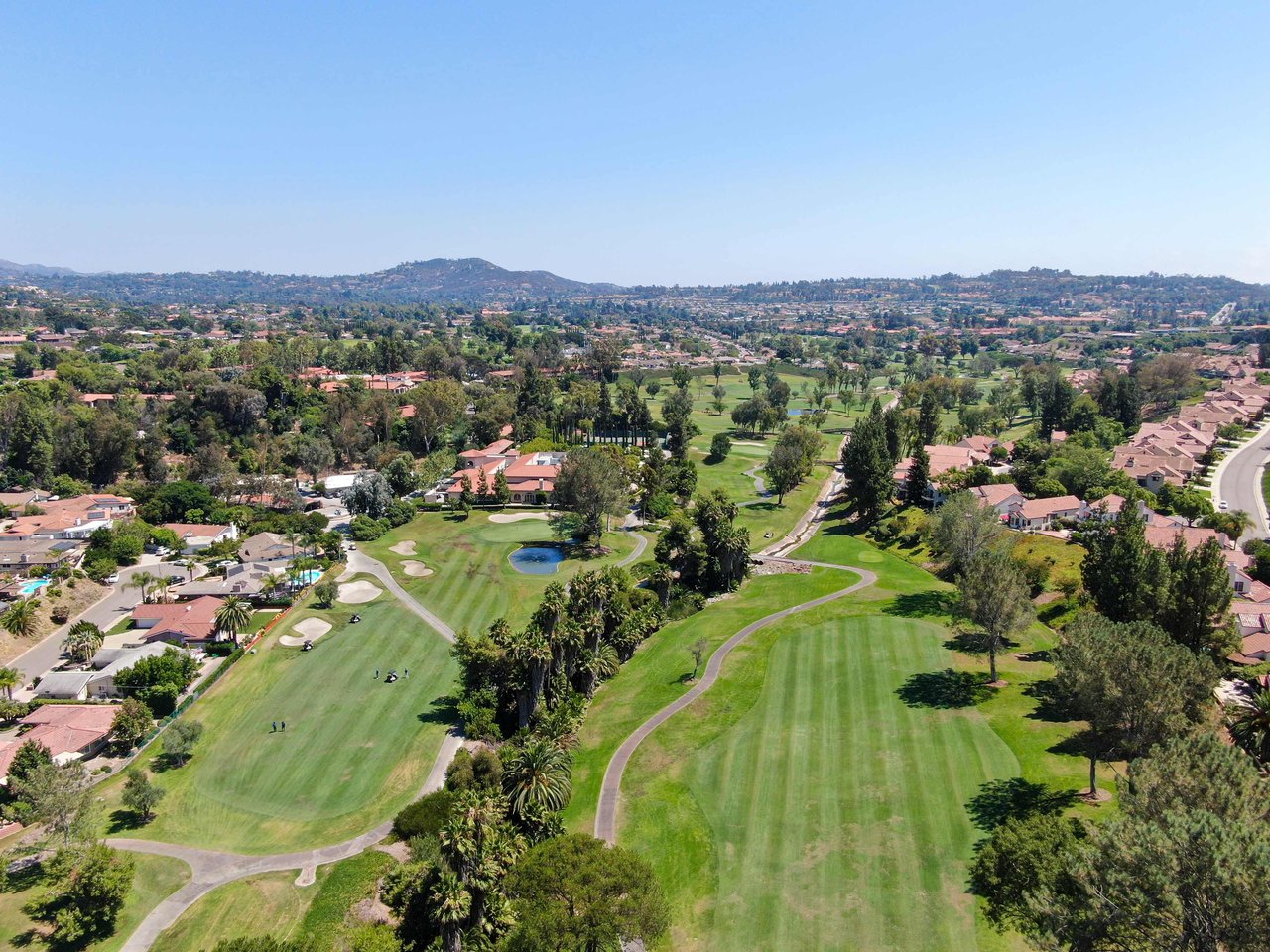
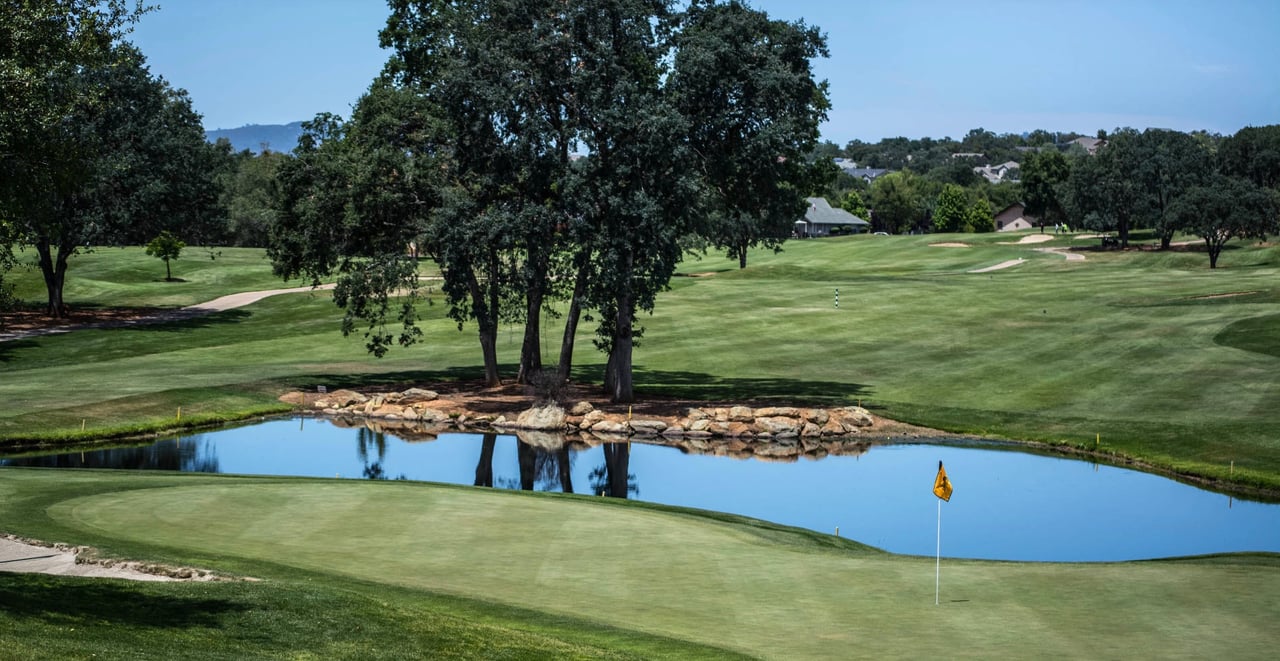
Oaks North is the sharpest illustration of this, because the fragmentation happens without even leaving the same 55+ community. Oaks North totals 1,963 homes, split between 1,379 condominiums and 584 single-family houses, all wrapped around the same 27-hole executive golf course. MLS tracking through 2025 showed detached homes in Oaks North closing near the low $1 million range in roughly two to three weeks on market, while attached condos in the same community closed in the low-to-mid $700,000s in about two weeks. Most sales landed at or above list price. Same golf course. Same clubhouse. Same HOA umbrella. A price gap of a quarter million dollars or more driven largely by whether the home shares a wall.
Push one layer deeper and the gaps widen again. Chapala, the only gated enclave within Oaks North, holds 151 detached single-story homes ranging from about 1,428 to 1,819 square feet, many backing directly onto the golf course. Marbella has 183 detached homes between 1,639 and 1,966 square feet along greenbelt walking paths. Mirador holds 202 homes as small as 1,286 square feet. And Oaks North Village, built in 1979, is 128 units, 123 of them attached condos as compact as 831 square feet. Four sub-communities, four different size bands, four different buyer profiles, all filed under the same age-restricted umbrella.
A single "Oaks North" search result can return a $700,000 attached condo and a detached single-story home listed near $1.3 million, both inside the same 55+ community. The word "Oaks North" tells you almost nothing about which one you're looking at.
The same pattern shows up outside the 55+ market
This isn't a quirk of age-restricted housing. In the rest of Rancho Bernardo, the same branching structure appears.
Westwood is anchored by the Westwood Club, a resident-run hub with pools, fitness space, and tennis courts that functions as the neighborhood's actual town square. Kids there attend Westwood Elementary, a National Blue Ribbon school that opened in 1971, before moving to Bernardo Heights Middle and then Rancho Bernardo High, a campus of more than 2,300 students with over 100 clubs and college enrollment rates above 90 percent. That school pipeline, the club membership, and the 38-acre Rancho Bernardo Community Park next door, home to the annual RB Alive carnival, all attach to the Westwood name specifically. A house two miles away in The Trails, described locally as one of the more architecturally distinctive tracts in the community, or in Bernardo Heights, home to its own condo development branded separately as Mira La Paz, carries none of that same package. They're all "Rancho Bernardo" on a listing sheet. They are not interchangeable on the ground.
Add The Greens to that list and you have roughly a dozen named pods, each with its own HOA structure, its own construction decade, and its own answer to the question "what does this actually cost to own." A single blended median can't carry that much variation without losing the information that matters most to a buyer trying to compare two specific houses.
What this looks like laid out side by side
Pod or complex | Housing type | What sets the price band | Notable amenity tie |
Oaks North (Chapala, Marbella, Mirador) | Detached, 55+ | Lot size, golf course frontage, gate access | Public 27-hole Oaks North Golf Course |
Oaks North Village | Attached condo, 55+ | Unit size (as small as 831 sq ft), built 1979 | Oaks North Community Center |
Westwood | Detached | School pipeline, Westwood Club membership | Rancho Bernardo Community Park |
Bernardo Heights | Mixed, condo complexes | Complex-specific HOA (Mira La Paz) | Bernardo Heights Country Club |
The Trails | Detached | Architectural distinctiveness, established lots | Long-established tract, mature landscaping |
That table is not a ranking. It's a reminder that "price per square foot in Rancho Bernardo" is a question that can't be answered honestly until you specify which row you're standing in.
Why this matters more than a slow news story about medians
The practical stakes show up the moment you're staring at a listing and trying to decide if it's priced fairly. A buyer comparing a Chapala listing to a Rancho Bernardo Village condo two neighborhoods over, using a portal's blended median as the benchmark, is working with a number that describes neither home. A seller in Marbella pricing off a citywide average risks leaving money on the table if their pod is quietly outperforming the blend, or overpricing if it isn't.
The questions that actually resolve this are simple and specific: Is the home in an age-restricted complex or not. Is it governed by a master HOA, a sub-association, or both, since Oaks North Village alone carries HOA dues of $648 a month that bundle internet, cable, water, sewer, trash, and building maintenance into a single bill, a structure that looks nothing like a detached-home HOA a few blocks over. Is it attached or detached. What decade was it built?
None of this is static, either. Rancho Bernardo Town Center's newest retail expansion, roughly 5,200 square feet, is now fully leased, with Paris Baguette Bakery Café and Bushfire Kitchen both set to open there in 2026. New retail at the community's commercial core tends to shift how the surrounding pods are perceived over time, another reason a snapshot median from six months ago stops being useful the moment you're actually shopping.
FAQ
Is there one accurate "median price" for Rancho Bernardo? Not in any way that's useful for comparing two specific homes. Different sources measure different things, list price versus sold price, and pull from whichever pods happened to transact in a given window. Treat any single median as a starting point for a conversation, not a verdict.
What's the real difference between buying in Oaks North versus the rest of Rancho Bernardo? Oaks North is age-restricted to residents 55 and older, with its own golf course and community center, and its detached homes carry a meaningfully different price tier than its attached condos even within the same complex. The rest of Rancho Bernardo has no age restriction and prices according to school assignment, HOA structure, and lot type instead.
Are HOA fees consistent across Rancho Bernardo? No. They vary by sub-association even within the same larger community. Oaks North Village charges $648 a month and bundles internet, cable, water, sewer, trash, and exterior maintenance into that one fee, a structure specific to that complex rather than a community-wide standard.
Does a lower price per square foot always mean better value? Not once you factor in what the number is hiding. A lower per-square-foot figure in an attached condo pod says nothing about whether a detached home two streets over, in a different HOA, with a different school assignment, is actually the better comparison for your situation.
If you're trying to figure out what a specific Rancho Bernardo pod is actually doing right now, not what a blended average says, that's a conversation worth having before you write an offer or set a list price. Peter Heines works this market pod by pod. Book a consultation and get a comparison built around the actual house you're looking at, not a citywide average that was never describing it in the first place.
This article is general information, not legal, tax or financial advice. Consult a qualified professional about your situation.